
How to Download and Use Forebet on iOS in Nigeria
Download Forebet on your iPhone or iPad in Nigeria 📱. Get step-by-step install tips, troubleshoot common issues, and enjoy accurate football predictions ⚽️.
Edited By
Christopher J. Wells
Forebet has been a popular platform among Nigerian football fans for making predictions and placing bets. Before the rise of smartphone apps and widespread internet access, many users relied on Forebet's old mobile booking code system to participate in football betting conveniently via basic mobile phones.
This old system worked through simple USSD-like codes or SMS shortcuts that enabled users to send their football picks or access betting options directly from their phones. Unlike the apps we see now, which depend on mobile internet and complex interfaces, this booking code approach fit well within Nigeria’s varied mobile connectivity landscape of earlier years.

The mobile booking code system provided an affordable, straightforward way to place bets without needing smartphones or quick internet, making football betting accessible to many Nigerians across urban and rural areas.
Users would dial a specific code or send an SMS containing a unique booking code associated with their prediction or bet choice. For instance, entering a code like #123 or sending a message formatted with match codes and predicted outcomes would register the bet on Forebet’s system. Payments were usually made separately through agents, shops, or through mobile money platforms that partnered with Forebet.
This method limited user errors with fixed formats but required memorising codes and could be slower compared to today's instant app interfaces. Still, it maintained a steady base of users especially where smartphones were expensive or mobile data was unreliable.
Accessibility: Nigerians without smartphones could still join the fun of football betting.
Cost-effective: No need for internet bundles or expensive data plans.
Ease of use: Simple codes reduced complicated navigation or app installation concerns.
It reflected the realities of Nigerian telecom infrastructure and economic diversity, ensuring many football lovers stayed engaged with predictions and betting.
With the rise of affordable smartphones, faster data networks, and fintech platforms like Paystack and Flutterwave, Forebet shifted focus to apps and websites that offer richer features, live updates, and easier payment options. The old mobile booking codes gradually phased out, replaced by more interactive digital betting experiences.
While this move improved user experience, some Nigerians without smartphone access had to adjust, moving to USSD services or local agents to maintain convenience.
In the next sections, we explore modern alternatives and how you as a Nigerian user can still make the most of Forebet’s football prediction offerings in today’s tech environment.
Understanding Forebet's old mobile booking code is central for anyone wanting to grasp how football predictions used to link with betting in Nigeria. This system was a practical tool designed to simplify the transfer of betting information via mobile phones, a necessity before smartphones and apps became widespread. It bridged the gap between Forebet's football analytics and local betting operators, allowing users to place bets conveniently using code numbers.
Forebet specialises in providing statistically-based football tips derived from mathematical models applied to match data. Unlike fans who rely on hunches, Forebet offers predictions based on factors like team form, head-to-head history, injuries, and other data points, giving bettors a more grounded edge. This made Forebet popular among Nigerians looking for a data-backed approach to football betting.
While Forebet caters globally, its services hit a unique spot for Nigerian users who often access football tips via mobile. In Nigeria, with football passion running deep, many bettors—especially those outside major cities—relied on simple technology to stay updated. This included not just tech-savvy users but also those with basic phones. Hence, Forebet’s prediction tools became useful for a broad demographic, from Lagos office workers to village-based football fans.
Mobile booking codes served as shorthand identifiers encoding betting information generated from Forebet’s predictions. Users received numeric or alphanumeric codes summarising their bet selections. These codes could then be sent via USSD or SMS to betting agents or platforms, sidestepping the need to re-enter all match details and options manually. This system was practical where direct internet access was limited or costly.
Each booking code corresponded directly to a betting slip. Once entered or sent to a betting terminal, the code unlocked all the details of the bet—matches chosen, types of bets, stakes—effectively regenerating the betting slip digitally. This saved time and reduced errors since the user didn’t have to manually list each game and prediction, which was beneficial during busy match days or on mobile devices with small screens.
Forebet's old mobile booking code was a clever workaround for Nigeria’s tech environment in its time, linking detailed football predictions with simple mobile communication to help bettors place informed wagers efficiently.
The system’s practical value lies in its simplicity and relevance at a time when smartphones were not ubiquitous, and internet connectivity had limits. For many Nigerian users, it formed a bridge between modern prediction science and accessible betting practice.
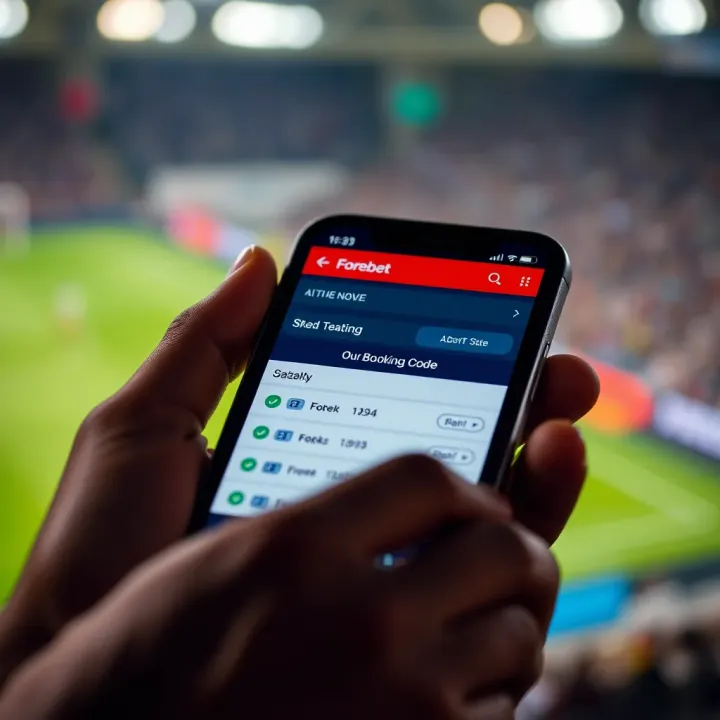
Understanding how the old mobile booking code worked is key to appreciating Forebet’s earlier approach to football betting in Nigeria. This system served as a bridge for users without ready internet access, allowing them to generate betting codes that could be redeemed or entered through basic mobile phones. The process was straightforward but had important practical implications for bettors seeking convenience and quick access.
The first step in using Forebet's old booking code was to generate a unique code representing the predicted matches and betting slips. Users typically accessed this by sending a specific keyword or request via SMS to a designated number. For instance, a bettor would text something like "Forebet1" to the service number, triggering an automated reply with a mobile booking code relevant to popular matches for that day.
Once received, this code acted like a digital ticket, containing all the necessary betting data without the user having to input complex details manually. Nigerian bettors found this especially useful during periods of limited data availability or unstable internet connections, as it skipped the need to visit websites.
Entering these codes via mobile devices involved keying the received alphanumeric string into compatible betting terminals or sending it back through USSD codes provided by local betting shops. For example, if a user was at a POS terminal in Lagos, they would input the code given by Forebet to place their bet instantly, provided the terminal supported this feature. This streamlined the betting process, as confirmations were often sent immediately to the user’s phone.
Despite its practical benefits, the old mobile booking code faced notable challenges, especially in Nigeria's diverse mobile network environment. Compatibility issues emerged because the codes relied on seamless SMS or USSD functionality, which some networks struggled to handle consistently. For example, users on MTN in remote areas sometimes experienced delays or lost messages, affecting timely betting.
Furthermore, user experience issues were common. The reliance on precise code entry meant any typographical mistake could invalidate the entire slip, a frustrating hurdle for many users not tech-savvy or hurried after work. Moreover, the alphanumeric codes could be lengthy and confusing, increasing the chance of errors. This complexity made the system less user-friendly compared to modern app-based platforms where one can simply tap selections.
For many Nigerians, especially in rural locations or those using older devices, these limitations made it hard to trust and fully adopt Forebet’s mobile code system.
While useful at the time, these factors pushed Forebet and local betting shops to seek improved methods that better fit evolving Nigerian telecom infrastructure and user expectations.
The shift away from Forebet's old mobile booking code reflects crucial changes in technology, user habits, and security concerns. Understanding why this change happened helps Nigerian users appreciate the improvements and adopt new methods with confidence. This section breaks down key factors that made the old system outdated.
The rise of app-based and online platforms has transformed how Nigerians interact with football predictions and betting services. Rather than relying on short codes entered via basic mobile phones, users now prefer smartphones offering full-featured apps. These apps allow users to check predictions, place bets, and receive updates with more convenience. For example, platforms like Bet9ja and NairaBet offer mobile applications that integrate Forebet tips in real-time, making betting smoother and faster.
Plus, internet accessibility has improved in urban and semi-urban areas, encouraging Nigerians to shift from USSD codes or SMS to mobile apps and websites. This change means users can access richer content, such as detailed match analyses and live odds, directly from their devices — a level of detail unattainable on old code-based systems.
Demand for real-time updates has become another driving force. Football fans today want instant notifications on match outcomes, injury reports, and odds changes. The old mobile booking codes couldn’t provide this immediacy, often leading to outdated or delayed information.
New platforms now push notifications and refresh data continuously, allowing users to react quickly to changing situations. This is especially important during ember months, when football activity peaks, and bettors want to stay agile. Having timely information can be the difference between winning and losing a bet.
Security concerns were a major drawback of the old code system. These codes were often transmitted via unencrypted SMS or USSD sessions, making them vulnerable to interception or fraud. Some users reported cases where their betting slips were manipulated, or others copied codes without consent. Compared to modern encrypted apps and secured web portals, the old system exposed users to avoidable risks.
Moreover, accessibility posed problems beyond urban centres. While many Nigerians in cities had easy mobile network access, rural users encountered frequent network drops and slower speeds. The old system depended heavily on stable GSM connections, which were patchy in villages or remote areas.
This meant that rural users sometimes couldn’t generate or submit booking codes reliably, excluding them from the betting processes or forcing multiple retries. Nowadays, newer platforms optimise for low bandwidth and include offline features, easing these challenges. For instance, popular betting apps now offer data-saving modes to cater for network constraints common in rural Nigeria.
The move away from Forebet's old mobile booking code was necessary to meet modern user expectations, tackle security lapses, and broaden access across Nigeria’s diverse mobile networks.
In summary, the transition aligns Forebet services with Nigeria's growing digital ecosystem and ensures that users benefit from speedier, safer, and more inclusive betting experiences.
As Forebet phased out its old mobile booking code, users needed new ways to access and utilise football predictions efficiently. This shift has opened up alternatives that offer more convenience, speed, and integration with local betting habits, especially in Nigeria where mobile and digital platforms have rapidly evolved.
Forebet now provides its predictions through accessible website interfaces and mobile apps, allowing users to connect directly without relying on outdated codes. Nigerian users can quickly visit Forebet's official website on any smartphone or tablet. The platform is optimised for mobile browsers, so even those with less powerful phones can navigate easily. There are also dedicated mobile apps for both Android and iOS, which reduce loading times and provide a smoother user experience compared to earlier methods.
These updated platforms come with user-friendly features that make predictions easier to read and apply. Notifications, live updates, and the ability to bookmark favourite matches help users stay informed without constantly refreshing pages or entering codes. It also allows users to explore additional analytics like over/under goals, probable line-ups, and head-to-head results, all within the app or site.
A key upgrade is the inclusion of real-time updates that reflect live match conditions and betting odds changes. This means Nigerian punters don't miss out on last-minute tips, which was a limitation of the old booking codes. Additionally, the platforms support multiple languages including English and Nigerian local dialects, which broadens accessibility.
Payment integration is another practical feature. Users linking their Forebet accounts with popular payment gateways like Paystack or Flutterwave can quickly fund bets without switching apps or re-entering data. Also, the platform supports notifications that warn users about match cancellations or rescheduling, which was harder to get under the old system.
Several Nigerian betting platforms now incorporate Forebet tips directly or allow users to follow Forebet's predictions while placing bets. Sites like Bet9ja, NairaBet, and Merrybet have partnerships or systems that encourage users to leverage such forecasts, enhancing decision-making and bet placement.
For instance, Bet9ja users can view Forebet’s statistical forecasts side-by-side with betting odds, helping them understand which games offer better value. This integration helps to bridge the gap between prediction and actual betting, making the process smoother and less error-prone.
Nigerian users can combine Forebet’s updated platforms with local betting services by cross-checking predictions with current market odds. A practical approach is to use Forebet’s app to analyse match data and then place bets through trusted Nigerian platforms with established payment flows.
Moreover, joining local betting communities on social media or forums supplements this approach. These groups often share real-time updates from Forebet and Nigerian sportsbooks, providing insight on odds shifts, strategy tips, and feedback on bet outcomes. Using these resources together lets punters make informed choices without relying on the old mobile booking code system.
By moving to modern platforms and integrating with local services, Forebet users in Nigeria get faster, more reliable, and secure access to football predictions, bridging technology gaps that once existed with the old mobile booking codes.
Getting the best results from Forebet football predictions involves more than just following tips blindly. Nigerian users must understand how to critically assess the information provided and manage the risks involved in betting. Additionally, staying current with system updates and engaging with other bettors can sharpen decision-making and avoid pitfalls.
Blindly trusting predictions often leads to losses, especially when crucial context is overlooked. Nigerian users should analyse the data behind Forebet's tips, such as recent team form, player injuries, home versus away performance, and even weather conditions affecting play. For example, a match where a key striker is injured or suspended should lower confidence in predictions favouring high goal counts.
It's also practical to compare Forebet's advice with other local football sources or expert analyses from Nigerian sports journalists. Cross-verifying information can reveal insights that help you make smarter bets. Remember, predictions should guide your choices, not dictate them absolutely.
Betting without a clear strategy risks losing more than intended. Effective risk management includes setting a budget for betting and never exceeding it, which is important in Nigeria where many bet with their hard-earned naira. Users should break down their budget into small units and decide how much to stake on each bet based on confidence levels.
For instance, you might use 5% of your total betting budget on safe bets and a smaller fraction on riskier predictions with higher payoffs. It's wise to avoid chasing losses by increasing stakes impulsively. Smart bettors also keep records of wins and losses to better understand which approaches work, enabling steady growth rather than quick gambling.
Forebet occasionally updates its platforms or changes how predictions are delivered. Nigerian users looking to avoid confusion or disruptions should rely on official channels for information. This includes Forebet's verified social media pages, their official website, and newsletters.
Monitoring these sources regularly means you get news on new features or the retirement of old systems like the mobile booking code before they impact your betting routine. For example, an announcement about a new app interface or integration with local betting platforms can improve your wagering efficiency.
Joining Nigerian betting communities online, such as forums, WhatsApp groups, or Facebook pages, offers real-time peer insights and shared experiences. These platforms often discuss Forebet predictions and system updates quickly, helping members troubleshoot problems and exchange tips relevant to the Nigerian betting scene.
Communities give a hands-on feel for how others manage risk, interpret predictions, and adapt to changes. However, it is essential to apply your own judgement, as advice quality varies. Still, engaging with fellow bettors keeps you alert and well-informed, helping you stay ahead in the fast-moving world of football betting.
Download Forebet on your iPhone or iPad in Nigeria 📱. Get step-by-step install tips, troubleshoot common issues, and enjoy accurate football predictions ⚽️.
Based on 14 reviews