
Forebet Casinos in Nigeria: Role and Impact Explained
🎰 Discover how Forebet casinos mix online betting tips with casino games, offering Nigerian punters fresh chances to play, win ₦, and stay smart in a tricky legal space.
Edited By
Amelia Foster
Forebet, known for its football predictions, plays a big role in Nigerian sports betting. When it crashes, many bettors scramble because the forecasts that guide their stakes suddenly become unreliable or unavailable. This situation isn’t a simple glitch but a disruption that can impact betting decisions severely.
A Forebet crash usually involves the website or its prediction systems going offline or delivering faulty data. For Nigerian bettors who rely on Forebet’s analytics to navigate the confusing world of sports betting, this can cause losses or missed opportunities.

When Forebet crashes, it’s not just the site that’s down—it’s the whole betting community that feels the sting.
This disruption can result from various technical failures, such as server overload due to high traffic during big tournaments like the CAF Champions League or server maintenance timed poorly during peak betting hours. At times, cyberattacks like Distributed Denial of Service (DDoS) can overload their servers, causing unexpected downtime.
Also, poor internet infrastructure in Nigeria occasionally aggravates user experience. Even if Forebet’s systems are functional, slow or unstable connections may make it seem like the crash is worse than it is. This is especially relevant when users depend on mobile data networks with uneven coverage.
The effects extend beyond just downtime. Incorrect predictions during such periods reduce trust in forecasts, prompting bettors to question if they should depend on Forebet going forward. Some may switch to local alternatives or even guesswork, increasing their risk.
To handle this, Nigerian bettors should:
Have backup sources: Use additional prediction tools like SoccerVista or Bet360 to avoid relying solely on Forebet.
Keep an eye on official announcements: Forebet’s social media or email updates often inform users about downtimes and fixes.
Avoid impulsive bets: When predictions are unavailable, betting more cautiously or skipping key matches reduces potential losses.
Understanding these causes and impacts empowers you to adapt your strategy smartly. As the Nigerian sports betting scene grows, navigating such disruptions will become a key skill for savvy bettors.
Understanding what the Forebet crash means is vital for Nigerian sports bettors who depend on its forecasts. Forebet serves as one of the most popular football prediction platforms, trusted by many for providing data-driven tips that influence betting choices. A crash in this context signals a breakdown or significant drop in the accuracy of these predictions, causing ripple effects across the betting community.
Knowing the nature of this crash helps bettors to reassess strategies and manage risks better. In the heat of ember months or busy league seasons, a sudden slip in prediction quality can lead to unexpected losses. Recognising this early gives you a chance to temper expectations and seek alternative sources.
Forebet plays a prominent role in sports forecasting, especially within Nigeria’s growing betting market. The platform specialises in predicting football outcomes by analysing match data, team forms, and other key statistics. Its forecasts reach both casual fans and seasoned bettors, making it an important tool for anticipating game results and placing informed bets.
The relevance of Forebet lies in its blend of quantitative methods and algorithmic modelling, which offers an edge over guessing or relying solely on intuition. By providing percentage chances for wins, draws, or losses, Forebet equips bettors with insights that can boost their chances of success if used wisely.
Forebet generates its predictions through complex mathematical models that process historical data, player statistics, team tactics, and other variables. It uses algorithms to scan patterns from thousands of football matches globally. While it doesn’t claim absolute certainty, its system offers probabilistic forecasts intended to guide users towards likely outcomes.
By combining elements such as attack and defence strength calculations and adjusting for home advantage, Forebet attempts to mirror real-world dynamics. This data-driven approach distinguishes it from sites relying mainly on expert opinion or crowd sentiment, adding practical value especially when local knowledge is patchy.
Among Nigerian users, Forebet enjoys popularity for offering free, accessible, and fairly detailed forecasts for both international leagues and local competitions. Many appreciate how it breaks down numbers clearly, which helps even novice bettors make smarter choices. Its mobile-friendly layout and timely updates mean predictions can be checked conveniently before placing bets, a must-have given Nigeria’s heavy mobile internet usage.
A Forebet crash occurs when the platform’s prediction accuracy visibly declines over a short period. This might happen due to technical faults, outdated or incorrect data inputs, or unexpected real-life events that algorithms fail to capture. Such a crash challenges the system’s reliability, specifically when multiple high-profile matches yield outcomes widely different from Forebet’s forecast.
From a practical standpoint, a crash means bettors who depend solely on Forebet’s tips face greater uncertainty. For example, if Forebet predicted an 80% chance of a home win but the match ended in a heavy defeat, this is a clear sign something has faltered in the forecasting mechanism.
Common signs of a Forebet crash include a string of inaccurate highlight predictions, increasing user complaints on social platforms, and visible divergence between expected and actual results during high-stakes fixtures. These symptoms suggest the model is struggling to adapt to fresh conditions or sudden changes.
It is crucial to distinguish a crash from regular prediction errors. No model predicts perfectly, so occasional misses are normal. However, a crash involves a systemic failure or consistent drop in forecast quality beyond normal variance. Think of it as a car engine knocking badly versus the usual sputtering when starting; one is a serious problem requiring immediate attention, the other not so much.
Knowing the difference between a temporary blip and a real Forebet crash can help you decide when to pause, adjust your betting, or seek alternative insights.
In sum, grasping what a Forebet crash entails equips bettors in Nigeria with the awareness needed to manage betting risks and protect their stakes from unexpected swings in prediction reliability.
Knowing why the Forebet crash happens helps bettors prepare for sudden shifts in prediction accuracy. It is essential to understand the root causes to avoid heavy losses during unstable periods. These causes fall mainly into two categories: technical system issues and external factors beyond algorithm control.
Software glitches and server issues often disrupt Forebet's ability to deliver reliable forecasts. For example, if the platform’s server goes down or experiences lag, prediction updates can be delayed or incorrect. In Nigeria, where internet connectivity can be patchy, such problems may worsen the situation as users receive outdated or incomplete data.
These glitches sometimes cause the system to freeze or send contradictory forecasts within a short span. A bettor relying on the latest prediction might unknowingly place a stake on outdated information, increasing the risk of losses. Thus, technical robustness is crucial for maintaining trust.
Data processing errors affecting prediction quality can also cause inaccurate outputs. Forebet uses complex algorithms to analyse huge sets of match data — player stats, past outcomes, weather, and more — but if the data feeding the system has errors or is incomplete, predictions falter.
Say a player’s recent injury status is not updated promptly, the system might predict optimistically, overlooking real fitness concerns. Similarly, wrong assumptions from algorithm updates or calibration errors can ripple across numerous matches, affecting forecast integrity sharply.
Unexpected changes in teams and players are common in football and impact Forebet predictions significantly. Transfers, suspensions, or lineup changes notified only closer to match time may not get properly integrated into the prediction model.
For instance, a key striker suddenly transferred during the transfer window or ruled out at the last minute disrupts expected team strength. Since Forebet’s AI might not adapt real-time, prediction accuracy dips until the system recalibrates.
Influence of real-time events like injuries or suspensions is another challenging factor. A sudden red card or injury during a match can swing the final result drastically, but such events are impossible to foresee accurately in pre-match predictions.
For example, if a player is unconscious due to unknown concussion moments before kickoff, none of the data can reflect this until match reports surface post-event. This gap highlights limitations in static forecasting models.
Bettors should consider these real-time unpredictables as risks outside algorithmic control.
Limitations of AI in capturing dynamic match factors mean Forebet can never fully replace expert human judgement. AI bases forecasts on historical patterns and probabilities, but football is sensitive to random, soft factors: morale, referee decisions, coaching tactics.
The AI might miss how a coach’s last-minute tactical switch could defy statistical expectations. Or it might not factor social pressures on Nigerian or African teams playing home or away. Such nuances are difficult to quantify yet affect outcomes materially.
Understanding these causes reminds bettors to treat Forebet as a helpful tool, not a foolproof oracle. Combining system predictions with fresh local info and real-time observation improves betting choices.
System glitches affect timeliness and reliability.
Data errors mislead predictions.
Sudden team/player changes cause inaccuracies.
Real-time injuries/suspensions disrupt forecasts.
AI misses subtle dynamic factors.
Having this knowledge equips Nigerian Forebet users to avoid overreliance on forecasts during unstable phases, making smarter betting decisions fully aware of these risks.
The Forebet crash has rattled many Nigerian sports bettors who depend heavily on its predictions to place wagers. Understanding how this crash affects the sports betting scene is vital. This impact isn't just about missed calls or wrong scores — it fundamentally challenges the trust bettors have built over time. When predictions falter, bettors face real consequences, especially in a market where information is king and every naira counts.
The first hit from a Forebet crash is a dip in prediction reliability. Forebet’s forecasts can suddenly fail to reflect actual match outcomes. For example, if Forebet regularly predicts a 2-1 win for a Nigerian Premier League team but during a crash starts showing inconsistent or completely wrong results, bettors expecting steady guidance will find themselves off-track. This break in consistency makes it difficult to rely solely on forecasts for match selection, leading bettors to question what once seemed dependable.
This unpredictability puts bettors in a tough spot, especially those who habitually rely on Forebet's detailed statistical outputs. In a country where many bettors look for small edges to maximise gains, a crash wipes out the confidence needed to stake sizeable bets.
When bettors base their wagers solely on Forebet forecasts, a crash can quickly lead to substantial financial loss. Imagine a bettor who stakes a large portion of their bankroll on predictions without checking for recent anomalies or complementary information. The crash's timing may coincide with important matches, amplifying the stakes and the risks.
This vulnerability exposes bettors to greater monetary danger because they lack the safeguards of diversification. Without alternative data sources or personal insights like local team form or injury reports, these bettors are more likely to lose money during periods of prediction instability. This situation is especially critical in the Nigerian context, where many rely on Forebet to beat odds due to limited access to multiple expert opinions.
Users often take to social media and betting forums to express frustration during Forebet crashes. Complaints about inconsistent predictions or abrupt changes in scoring forecasts surface rapidly. For instance, Nigerian bettors might cite losses while using Forebet predictions during a sudden downturn. This feedback, filled with disappointment and calls for accountability, highlights the real-time impact on users' betting experience.
Such responses can lead to a swift erosion of user confidence, prompting some to suspend use or shift to other platforms. Discussions often revolve around whether the platform is maintaining its usual quality or if the crash reveals deeper technical or methodological issues.
Repeated crashes or prolonged prediction failures risk damaging Forebet’s reputation among Nigerian sports betting communities. Trust built over years can be fragile; once bettors doubt the platform's accuracy, they might seek alternatives like local tipsters or newer prediction apps that promise greater stability.
For Forebet, this means more than just temporary criticism—it affects user retention, referral rates, and ultimately their position in the competitive sports forecasting market. Nigerian bettors tend to share their experiences openly, impacting Forebet's brand perception across social media and betting circles. Recovering from such setbacks involves transparent communication and demonstrable improvements in prediction reliability.
Bettors should view Forebet’s crash as a prompt to combine forecasts with local insights and diversified betting strategies, balancing statistical data with the realities of Nigerian football dynamics.
In summary, the Forebet crash reshapes how Nigerian bettors interact with forecasts, highlighting risks to betting outcomes and long-term trust issues. Understanding these impacts helps bettors prepare and adapt better strategies, safeguarding both their money and confidence.
The sudden disruptions known as the Forebet crash can catch many bettors off guard, especially those who rely heavily on Forebet's predictions. Understanding how to respond not only shields your wallet but also improves decision-making during these unstable times. Bettors need practical approaches to manage the unpredictability that the crash introduces to sports forecasts.
Diversifying sources of information is one of the smartest moves a bettor can make during a Forebet crash. Relying solely on a single prediction platform carries risk — if the forecasts falter, so do your chances of winning. By consulting multiple sources such as local sports websites, betting forums, and alternative prediction services, you create a broader picture. For example, checking platforms like SoccerVista, Betensured, or even popular Nigerian sports blogs can reveal trends that Forebet might miss during a crash.
This approach not only provides backup data but also allows comparison across different models, helping you spot unusual forecast patterns early. That way, when Forebet’s system seems unreliable, you’re not flying blind but have other credible insights to guide your bets.
Cross-referencing with local knowledge and expert tips adds a vital angle often overlooked by automated forecasts. Local pundits and seasoned bettors in Nigeria have first-hand information about player form, team morale, and ground realities that no algorithm can fully capture. For instance, a Lagos-based sports analyst might highlight a key player’s injury or training setback before it hits official reports, influencing match outcomes significantly.
Using local knowledge helps to correct or confirm predictions, especially in tight matches or lower league games where data might be scarce or erratic. Engaging with community groups or following well-respected analysts on social platforms can strengthen your betting strategy when Forebet’s predictions go off track.
Limiting stakes during unstable prediction periods is crucial to protect your funds when confidence in Forebet’s forecasts dips. Reducing the amount you wager during a crash limits exposure to losses caused by unpredictable outcomes. For example, if you usually stake ₦5,000 per bet, consider dropping to half or even a quarter until the forecasts stabilise.
This measured approach prevents heavy losses from rash decisions during uncertain times. It also encourages a more disciplined betting habit, which can pay off long-term, especially in the volatile Nigerian betting environment affected by fluctuating odds and match unpredictability.
Using analytics alongside direct observation of teams enhances your ability to make informed betting choices. While Forebet uses advanced data models, nothing replaces watching matches or highlights yourself. Direct observation lets you assess team tactics, player fitness, and on-field dynamics that data sets might miss.
Combine this personal insight with analytics from Forebet or other platforms to balance quantitative and qualitative judgments. For example, if Forebet predicts a home win but you notice a key player was substituted early in recent games, you might reconsider your bet or adjust stakes accordingly. This blend of analysis and observation sharpens your edge in the betting market.
Responding to the Forebet crash isn’t about abandoning forecasts altogether but adapting your approach to manage risks and maximise opportunities amid uncertainty.
Taking these steps will help you navigate prediction disruptions confidently and keep your betting strategy resilient, even when Forebet faces challenges.
Understanding the overall reliability of Forebet forecasts is essential for Nigerian bettors. This evaluation helps you decide how much to trust their predictions before staking your money. Since Forebet influences many betting decisions, knowing its strengths and weaknesses can improve your betting outcomes and reduce losses.
Forebet’s past prediction success rates provide a useful benchmark. While the platform claims an accuracy of around 70% for some leagues, this varies widely depending on the competition and type of prediction (win, draw, exact score). For Nigerian football fans, leagues like the English Premier League or La Liga see better consistency, but local leagues can be less predictable. Tracking these historical metrics allows bettors to estimate risk more realistically.
Comparing Forebet with other prediction platforms is also practical. Platforms such as SofaScore or Betensured may offer different algorithms or data sources, resulting in varying prediction accuracy. For example, SofaScore includes crowd statistics and hails user contributions, which can capture local insights better in some cases. By cross-referencing Forebet predictions with others, you can spot potential anomalies or get a fuller picture before committing stakes.
One big challenge Forebet faces is modelling unpredictable sports factors. Variables like sudden player injuries, last-minute team changes, weather conditions, and even referee decisions can shift game outcomes in ways algorithms struggle to account for. This unpredictability inherently limits any forecasting platform, especially when the Nigerian league experiences abrupt changes due to administrative hiccups or player transfers.
To enhance reliability, Forebet could improve its data inputs and algorithms. Incorporating more real-time data feeds, such as live injury updates, coaching changes, or official team announcements, would make predictions more responsive. Additionally, blending AI forecasts with expert human analysis—especially from Nigeria-based football pundits—could balance numbers with local nuances.
Reliable data and smart algorithm adjustments are key to building trust again after a Forebet crash. Bettors benefit most when the platform evolves alongside the game’s unpredictable nature.
In summary, evaluating Forebet’s reliability requires looking at past performance, comparing with peers, and recognising inherent prediction limits. Continuous improvement in data handling and algorithm design offers hope that future crashes can be minimised, helping Nigerian bettors make wiser, better-informed choices.
🎰 Discover how Forebet casinos mix online betting tips with casino games, offering Nigerian punters fresh chances to play, win ₦, and stay smart in a tricky legal space.
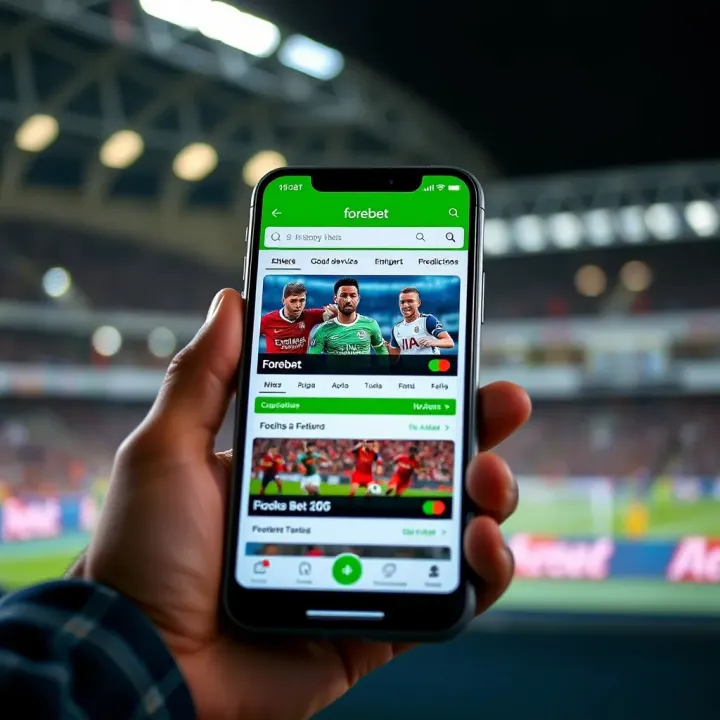
📱 Learn the key Forebet app requirements for Nigerian users: device compatibility, internet access, account setup & smooth usage tips. Get started confidently today!
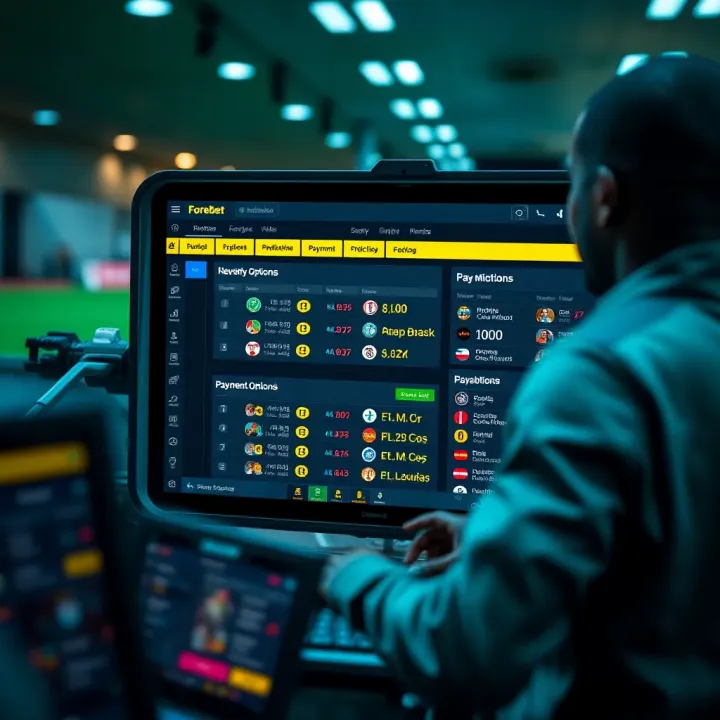
📲 Learn how to create a Forebet account easily! Get reliable football tips, navigate payment options, and follow Nigerian betting rules for safe play. ⚽💰

📱Discover how to safely download and install Aviator Forebet on your Android & iOS devices in Nigeria. Get tips for smooth use and tackle common challenges easily!
Based on 13 reviews